


Table of Contents
- Why Fine Silver Jewelry Needs Different Storage Than Sterling
- How to Clean Sterling Silver Jewelry Before Storage
- How to Prevent Silver Jewelry From Tarnishing
- Anti-Tarnish Jewelry Storage: Materials That Actually Work
- How to Store Jewelry While Traveling
- Long-Term Storage for Gemstones, Pearls, and Delicate Settings
- Frequently Asked Questions
Last Updated: October 17, 2026
Why Fine Silver Jewelry Needs Different Storage Than Sterling
Fine silver jewelry tarnishes faster than sterling, and that single fact changes how you should store it. Fine silver is 99.9% pure silver. Sterling silver is 92.5% silver mixed with copper for strength. Both tarnish, but the copper in sterling actually reacts first, so pure silver can stay bright longer in the same conditions.
Here is the twist most guides miss: fine silver is softer, so it scratches and bends more easily. That means protection matters as much as tarnish control. At Prime Titan, we sell 925 sterling silver jewelry, and questions about storage almost always come down to two things: air and moisture.
Silver tarnishes when it reacts with sulfur compounds in the air. The U.S. Environmental Protection Agency's indoor air quality guidance notes that indoor air carries many trace gases, and humidity makes reactions worse.
So the goal is simple: limit air exposure, control moisture, and keep pieces from touching each other.
| Silver Type | Purity | Best Storage Approach |
|---|---|---|
| Fine silver | 99.9% silver | Airtight bag, soft pouch, low humidity |
| Sterling silver | 92.5% silver | Lined box, individual compartment, anti-tarnish strip |
| Gold vermeil | Gold over sterling | Soft pouch, keep away from abrasives |
How to Clean Sterling Silver Jewelry Before Storage
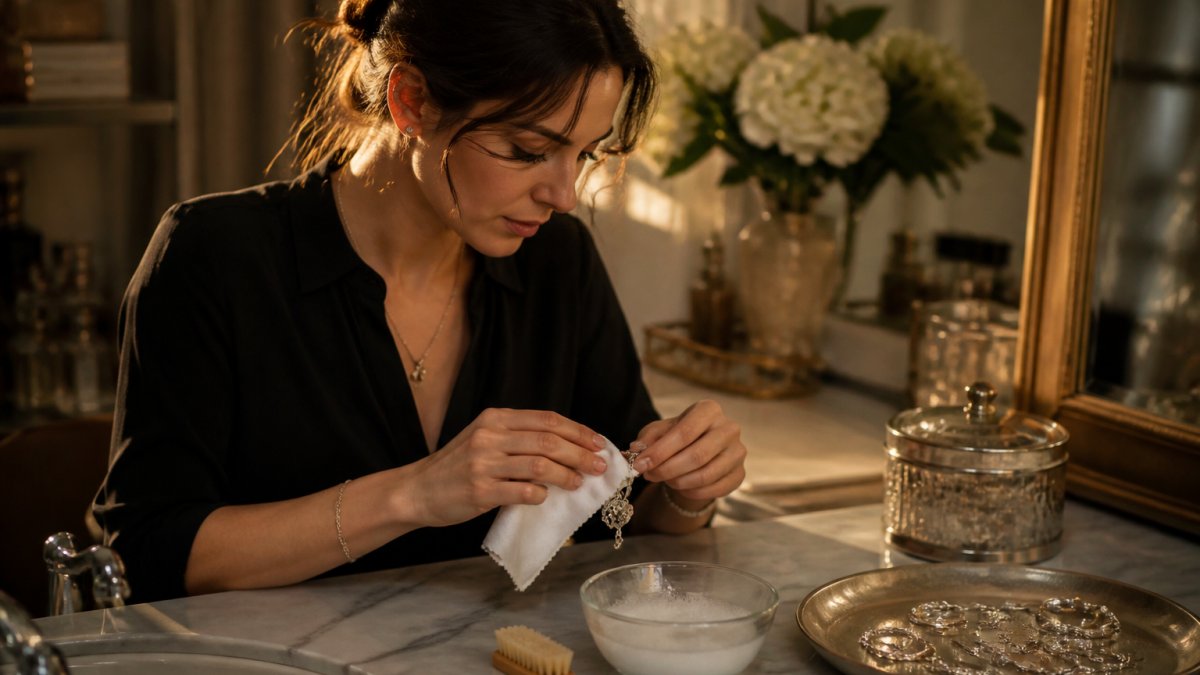
Never store silver jewelry that still has oils, lotion, or perfume on it. Residue traps moisture and speeds up tarnish. A quick clean before storage keeps pieces shiny for months.
A Step-by-Step Prep Routine Before Anything Goes in a Box
Follow this routine every time you put jewelry away for more than a few days:
- Lay the piece on a soft cloth. Work over a towel so nothing rolls away.
- Wash with mild soap and warm water. Use a drop of dish soap, not harsh cleaners.
- Brush gently with a soft-bristle brush. Focus on crevices and the clasp.
- Rinse in clean water. Remove all soap film.
- Dry completely with a cotton cloth. Any leftover moisture causes tarnish.
- Let it air-dry for a few minutes. Check the clasp and chain links.
- Place it in its storage pouch or compartment. Do not skip this step.
How to Prevent Silver Jewelry From Tarnishing
Tarnish prevention comes down to blocking three things: air, moisture, and contact with sulfur-bearing materials. Do that, and your silver stays bright far longer.
The mechanism matters because it tells you what to prioritize. Silver reacts with sulfur compounds in the air to form silver sulfide, the dark film you see on a neglected chain. Moisture accelerates that reaction, and heat speeds it up further. So a humid, warm spot is worse than a dry, cool one even if both are sealed.
Humidity and Temperature: What Actually Helps
A common pattern is that tarnish appears fastest in rooms where relative humidity stays above roughly 60%. Below about 50%, the reaction slows noticeably. You do not need a laboratory-grade setup, but you do need to know where your home sits.
- Target range: keep storage areas in the 40-50% relative humidity band when you can.
- Temperature: cooler is better. A bedroom closet stays more stable than a kitchen or bathroom.
- Air movement: a sealed container beats an open drawer, because still, trapped air holds less incoming sulfur.
When moisture-control products are worth it: silica gel packets earn their place in sealed containers, travel cases, and any drawer in a humid climate. They do little in an open-air jewelry dish, because they saturate quickly and stop working. Replace or recharge them on a schedule rather than leaving the same packet in place for years.
When they are not worth it: if your storage is already in a dry, climate-controlled room, a silica packet adds little beyond peace of mind. Over-drying is rarely a problem for plain silver, but it can matter for pearls and opals, which is why those pieces get separate treatment below.
Habits That Actually Move the Needle
- Store pieces in a cool, dry drawer away from bathrooms and kitchens
- Keep the container sealed, not just closed
- Avoid direct sunlight, which raises surface temperature and speeds oxidation
- Press excess air out of zip-close bags before sealing
- Add a silica gel packet to each sealed drawer or case, and refresh it periodically
- Keep silver away from rubber, latex, and wool, which can release sulfur or hold moisture
Anti-Tarnish Jewelry Storage: Materials That Actually Work
The right materials make a real difference. Tarnish-resistant storage is not about fancy boxes; it is about what touches the silver.
Materials that protect silver:
- Cotton lining and soft felt: gentle, breathable, scratch-free
- Zip-close bags: block air when sealed well
- Anti-tarnish strips: absorb sulfur compounds
- Silica gel packets: pull moisture from the air
- Individual pouches: keep pieces apart
Materials to avoid in direct contact with silver:
- Rubber bands and latex, which contain sulfur
- Wool and newspaper, which hold moisture and acids
- Cardboard and paper with high acid content
- Adhesive tape left on a piece
How to Store Jewelry While Traveling
Travel storage needs to be compact and protective. A soft travel case with individual compartments works best, and it stops necklaces from tangling.
Travel storage checklist:
- Use a zip-close bag for each piece
- Lay necklaces flat or loop them through a straw
- Fasten clasps so chains do not knot
- Pack a small silica packet in the case
- Keep the case in carry-on, not checked luggage
- Never toss loose pieces into a toiletry bag
Preventing tangling starts before you leave. Close every clasp and store each chain in its own pouch. If two chains must share space, separate them with a soft cloth.
Long-Term Storage for Gemstones, Pearls, and Delicate Settings
Delicate jewelry needs gentler handling than plain silver, and long-term storage adds a second layer of risk: time. Pearls are soft and scratch easily. Opals and turquoise can absorb moisture and change color. Gemstones in prong settings can loosen over months of sitting still. The storage advice that protects plain silver does not always protect the stones set into it.
Mixed-Material Conflicts to Watch For
When silver shares a piece with a stone or pearl, the two materials can want different things:
- Pearls prefer a soft pouch and some airflow. Sealing them airtight for months can dry them out or trap residue.
- Opals dislike dry heat, which can cause crazing or cracking over time.
- Turquoise and other porous stones can absorb moisture, oils, and even dyes from nearby materials.
- Prong-set stones can work loose if the piece is jostled or stored flat under pressure.
The practical fix is to store each piece in its own soft compartment, lay gemstone pieces flat so prongs do not catch, and never stack a pearl strand under heavier items.
Preparing a Piece for Months of Storage
Before a piece goes into long-term storage, run through this routine:
- Inspect it. Check prongs, clasps, and any glued settings for looseness.
- Clean it gently. Use mild soap and warm water for silver; skip ultrasonic cleaners and harsh chemicals on pearls, opals, and porous stones.
- Dry it completely. Any trapped moisture becomes a tarnish starter over months.
- Wrap it. Use a soft, non-abrasive pouch or a lined compartment.
- Label it. A small note helps you remember what is where when you rotate pieces.
- Place it in a cool, dry, dark location. Light and heat both accelerate change.
The Gemological Institute of America's gem care guidance recommends keeping gemstones away from harsh chemicals and sudden temperature changes. For silver jewelry with stones, that same advice applies, and it matters more the longer a piece sits.
Inspection Cadence
A common pattern is to check stored jewelry twice a year. Look for tarnish, loose clasps, scratches, and any sign of moisture inside the container. Pearls and opals benefit from a slightly more frequent look, since changes in those materials can be gradual and easy to miss. A quick polish and re-bag keeps everything ready to wear.
Frequently Asked Questions
How best should you store sterling silver jewelry to keep it shiny?
Store each piece in its own cotton-lined compartment, individual pouch, or zip-close bag with an anti-tarnish strip. Keep the box in a cool, dry drawer away from direct sunlight and humidity. Add a silica gel packet to absorb moisture. This limits air exposure and oxidation, which is what turns silver dark. Check pieces every few months and re-polish as needed so tarnish never gets a chance to set in.
Should you clean silver jewelry before storing it?
Yes. Oils, lotion residue, and skin salts left on the surface speed up tarnish once the piece is boxed. Wipe each item with a soft cotton cloth, use a mild soap and warm water bath for heavier buildup, dry completely, then polish with a silver cloth. Never store a piece while it is still damp, because trapped moisture is the fastest route to oxidation inside a closed jewelry box.
What is the best anti-tarnish jewelry storage product?
Look for cotton-lined jewelry boxes, tarnish-resistant silver cloth pouches, zip-close polyethylene bags, and anti-tarnish strips or tabs. Silica gel packets help control humidity in the drawer. Avoid wool, rubber, latex, and cardboard in direct contact with silver because they release sulfur compounds that accelerate tarnish. A simple combination of a lined box, individual pouches, and a few silica packets covers most home storage needs.
Can you store silver jewelry in a jewelry box?
Yes, as long as the box has a soft cotton or tarnish-resistant lining and individual compartments. Separate necklaces from bracelets and rings so clasps do not scratch polished surfaces, and fasten each necklace clasp before laying it flat or hanging it. Keep the box closed and stored in a dry drawer. If the box sits on an open dresser near a window, humidity and sunlight will undo most of the protection it provides.
Fine silver jewelry rewards a little routine. Clean it, dry it fully, and store it away from air and moisture, and it stays bright for years. At Prime Titan, we make that easy with 925 sterling silver jewelry, secure checkout, and U.S. shipping. Our collection is built for people who want quality pieces without the guesswork. Get started with Prime Titan and find silver jewelry worth protecting.
Deja un comentario
Todos los comentarios son moderados antes de ser publicados.